Diving into the world of Substance Designer unveils a realm of endless possibilities for 3D design enthusiasts. With its unique features and capabilities, this software tool stands out from the rest, revolutionizing the way textures and materials are created. Let's embark on a journey to discover the ins and outs of Substance Designer.
Introduction to Substance Designer
Substance Designer is a powerful node-based texturing tool used in the field of 3D design to create realistic materials for objects in video games, animation, visual effects, and more. It allows artists and designers to seamlessly create and manipulate textures with a high level of detail and customization.
Points of Differentiation
- Node-Based Workflow: Substance Designer utilizes a node-based system, offering a non-destructive and procedural approach to texture creation. This allows for easy iteration and adjustment of textures.
- Material Authoring: Unlike traditional software tools, Substance Designer focuses on material authoring rather than direct texture painting. This enables the creation of complex and dynamic materials with ease.
- PBR Workflow: Substance Designer fully supports Physically Based Rendering (PBR), ensuring that materials created in the software are physically accurate and consistent across different lighting conditions.
Key Features and Capabilities
- Procedural Texturing:Substance Designer offers a wide range of procedural nodes that can be combined to create intricate textures without the need for manual painting.
- Material Library:The software comes with a vast library of pre-built materials that can be customized and used in projects, saving time and effort for artists.
- Smart Materials:Smart Materials in Substance Designer allow for the automatic adaptation of textures to the underlying geometry, providing realistic results with minimal manual adjustment.
- Export Options:Substance Designer supports a variety of export options, including compatibility with popular game engines and rendering software, making it versatile for different pipelines.
Interface and Tools
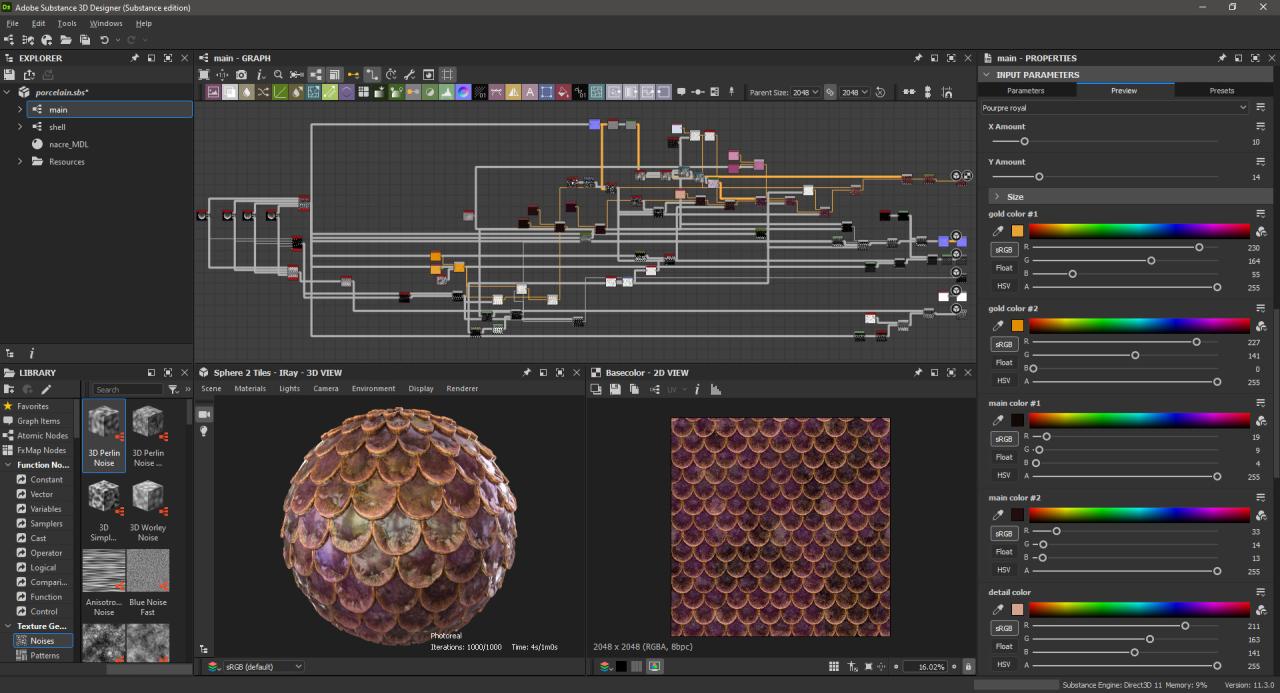
When opening Substance Designer, users are greeted with a clean and intuitive interface designed to streamline the process of creating textures and materials. The workspace is divided into different panels that can be customized based on individual preferences. Users can easily access various tools and settings to manipulate textures, generate patterns, and preview materials in real-time.
Node-Based Graph Editor
One of the key features of Substance Designer is its node-based graph editor, which allows users to create complex textures by connecting nodes that represent different functions and operations. These nodes can be used to generate patterns, blend textures, apply filters, and much more.
The visual representation of the graph editor makes it easy to see the flow of information and adjust parameters as needed.
Library of Procedural Nodes
Substance Designer comes equipped with a vast library of procedural nodes that can be used to create a wide range of textures and materials. These nodes include generators, filters, blend modes, and transformation tools that can be combined in endless ways to achieve unique results.
Users can also create custom nodes to extend the functionality of Substance Designer even further.
Real-Time 3D Preview
One of the most powerful tools in Substance Designer is the real-time 3D preview, which allows users to see how their textures will look on a 3D model in real-time. This feature enables artists to make adjustments and fine-tune their materials quickly, without the need to constantly switch between applications.
The interactive preview helps users achieve the desired look and feel of their textures before exporting them for use in other software.
Bitmap2Material Integration
Substance Designer seamlessly integrates with the Bitmap2Material tool, allowing users to create materials from a single image or photograph. This feature enables artists to extract details, colors, and patterns from images and convert them into editable materials within Substance Designer.
By leveraging Bitmap2Material, users can quickly generate realistic textures based on real-world references.
Export Options
Substance Designer offers a variety of export options to ensure compatibility with different rendering engines and software applications. Users can export their textures in various file formats, including bitmap images, Substance materials, and PBR shaders. This flexibility allows artists to seamlessly integrate their textures into their preferred workflow and deliver high-quality results.
Material Creation
Creating materials in Substance Designer involves a procedural approach that allows for the generation of complex textures with ease. The software provides a node-based system that enables artists to manipulate and combine various nodes to achieve the desired material effects.
Workflow for Designing Complex Textures
In Substance Designer, designers start by creating a base material using nodes such as noise, patterns, gradients, and filters. These nodes can be adjusted and combined to add details like roughness, color variations, and surface imperfections. By layering and blending these elements, intricate textures can be achieved.
- Utilize the power of procedural generation: Substance Designer's procedural workflow enables artists to create versatile materials that can be easily modified and adapted to different projects.
- Explore the library of pre-built nodes: Substance Designer offers a wide range of nodes that can be used to generate specific effects, saving time and effort in material creation.
- Iterate and refine: Designers can continuously tweak and refine their materials by adjusting node parameters and experimenting with different combinations to achieve the desired look.
Substance Designer streamlines the process of material creation by providing a flexible and intuitive platform for generating custom textures.
Efficiency Comparison with Traditional Methods
When comparing the efficiency of creating materials in Substance Designer versus traditional methods like hand-painting or scanning textures, Substance Designer offers several advantages:
- Non-destructive editing: Changes can be made at any stage of the process without affecting the original material, allowing for quick iterations and adjustments.
- Scalability: Materials created in Substance Designer can easily be scaled to different resolutions without loss of quality, making them suitable for various projects and platforms.
- Reusability: Once a material is created, it can be saved and reused in future projects, saving time and effort in the long run.
Procedural Texturing

Procedural texturing is a technique used in 3D design to create textures algorithmically rather than manually painting them. Substance Designer greatly facilitates this process by providing a node-based workflow where users can create complex textures using a combination of nodes and functions.
Examples of Procedural Textures in Substance Designer
- Wood Grain: By combining noise patterns, gradients, and transformation nodes, realistic wood grain textures can be generated procedurally in Substance Designer.
- Rust Effect: Utilizing various rust-related filters, color adjustments, and blending modes, intricate rust effects can be achieved without the need for external texture files.
- Marble Veins: Through the manipulation of fractal patterns, color modulation, and warping nodes, intricate marble vein patterns with natural variations can be created procedurally.
Advantages of Using Procedural Texturing in 3D Design Projects
- Non-Destructive Workflow: Procedural textures can be easily modified and adjusted without losing quality, allowing for quick iterations and experimentation in the design process.
- Small File Sizes: Since procedural textures are generated algorithmically, they occupy less disk space compared to image-based textures, making them ideal for optimizing project file sizes.
- Scalability: Procedural textures can be scaled up or down without loss of quality, making them versatile for various resolutions and sizes in 3D projects.
- Consistency: With procedural texturing, the same texture can be replicated consistently across multiple objects or scenes, ensuring visual coherence in the design.
Exporting and Integration
When it comes to Substance Designer, the process of exporting materials and integrating them into various 3D design software is crucial for bringing your creations to life. Let's dive into the options for exporting materials, discuss integration methods, and explore tips for optimizing the export process.
Export Options
- Substance Package (.sbsar): Exporting materials as Substance Packages allows for easy sharing and reusability across different platforms and software.
- Bitmap (.png, .jpeg): Exporting textures as bitmaps is useful for direct use in rendering software for applying materials to 3D models.
- OpenGL (.obj): Exporting materials in the OpenGL format can be beneficial for previewing the material in 3D software environments.
Integration with 3D Design Software
- Substance Designer offers seamless integration with popular 3D design software like Autodesk Maya, Blender, and Unreal Engine.
- Materials created in Substance Designer can be directly imported into these software applications, maintaining their procedural nature for easy editing.
- By utilizing Substance Designer plugins or Substance files, the integration process becomes streamlined, enhancing workflow efficiency.
Optimizing Export Process
- Before exporting, ensure that your material is fully optimized and free from any errors or artifacts to achieve the best results.
- Adjust the export settings based on the requirements of the target software to maintain consistency in material appearance.
- Consider creating multiple export presets for different software applications to save time and effort in the integration process.
- Regularly test the exported materials in the designated 3D software to ensure compatibility and make any necessary adjustments.
Community and Resources
Joining the online community of Substance Designer users can provide valuable support, inspiration, and resources for designers and artists looking to enhance their skills and knowledge. Being part of this community allows individuals to connect with like-minded professionals, share tips and tricks, and stay updated on the latest trends and techniques in the world of procedural texturing.
Online Tutorials and Forums
- Online tutorials: Platforms like YouTube, ArtStation, and Substance Academy offer a wealth of tutorials covering a wide range of topics, from basic to advanced techniques in Substance Designer.
- Forums: Websites like Substance Share, Polycount, and Allegorithmic Forum provide a space for users to ask questions, seek feedback, and engage in discussions with other community members.
Websites for Learning
- Substance Designer's official website: Offers documentation, tutorials, and resources for users to improve their skills and stay updated on new features.
- ArtStation and Gumroad: Platforms where artists and designers share their work, tutorials, and resources related to Substance Designer.
Benefits of Community Participation
- Networking: Connect with fellow designers, artists, and industry professionals for collaboration opportunities and career growth.
- Feedback and Support: Receive constructive feedback on your work, troubleshoot issues, and learn from the experiences of others in the community.
- Inspiration and Motivation: Stay inspired by exploring the work of other talented artists, sharing your own creations, and participating in community challenges and events.
Final Thoughts
As we conclude our exploration of Substance Designer, it's evident that this software is a game-changer in the realm of 3D design. From material creation to procedural texturing, Substance Designer offers a myriad of tools and resources that empower designers and artists to unleash their creativity.
Dive in and experience the endless opportunities that Substance Designer has to offer.
Helpful Answers
How does Substance Designer differ from other design software?
Substance Designer focuses on creating textures and materials through procedural methods, setting it apart from traditional design software that relies on manual processes.
Can materials created in Substance Designer be used in other 3D design software?
Yes, materials can be exported from Substance Designer and seamlessly integrated into various 3D design programs for a cohesive workflow.
What are the advantages of procedural texturing in Substance Designer?
Procedural texturing allows for non-destructive editing, parametric control, and the generation of infinite variations, enhancing efficiency and creativity in 3D design projects.








![How To Replace Siding On A House [Step By Step Guide]](https://market.posmetropadang.co.id/wp-content/uploads/2025/11/worker-installing-panels-beige-siding-on-the-facade-of-the-house-How-To-Replace-Siding-On-A-House-Step-By-Step-Guide-120x86.png)